The state of Alaska is extreme in a lot of ways, with one of them being an inordinate amount of earthquake activity. On average, there are 1,000 earthquakes across Alaska each month. Granted, each quake generally isn’t in a populated area or at a high magnitude, but any resident of Alaska can recall having felt multiple quakes, both large and small. This, combined with areas of poor soil/permafrost/peat moss/you name it, can lead to all manner of buildings sinking and settling over time. To address this issue, structural foam (or geo foam) is an effective and innovative long term solution that more and more people have been using. In this blog, we want to go over the various ways that structural foam can be used to lift, restore, and stabilize people’s homes, slab, shops and warehouses. We will also answer a very common question that we receive at Polyseal daily – can houses lifted with structural foam settle?

Uses of Structural Foam
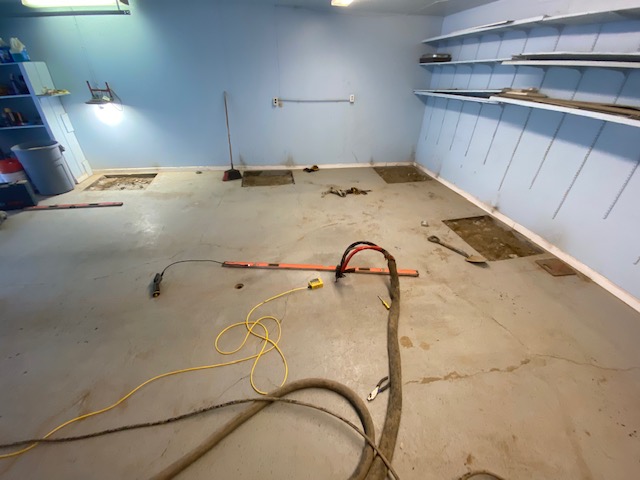
Structural geo-foam has a myriad of uses – it can be used to lift and level settled sidewalks, garage slabs, house foundations, warehouse foundations, concrete driveways, roadways, bridge abutments, tunnels, and more. Another innovative application is is the use of deep injection – this process involves driving steel ports deep into the subsoils below the affected structure and doing high pressure injection to fully saturate and stabilize any voids or fissures present. The foam forms a sort of matrix ‘tree-root’ system that will completely fill and bed the surrounding area, almost akin to a chemical/poly pier. Deep injection is commonly used on most house lift projects, and can also be used for unique applications like bank erosion, water control, and more. For house foundations, foam is by far the least invasive option compared to helical piers. To install piers, the entire outside foundation of the house needs excavated and exposed. In the case of foam, it can be installed via the crawlspace, or smaller access holes can be cut into the basement slab to access and lift/bed the perimeter.

Limitations of Structural Foam
Like most things, geo foam is not a magic bullet for all projects and has its limitations. It cannot be used to lift asphalt; unlike concrete, asphalt is not rigid enough and will just bulge/split where foam starts to lift. There has been some limited success with doing deep injection to lift asphalt areas since the ground below can act as a bigger buffer section to prevent lifting at a single point, but it really depends on the specific project. Another pain point is skinny sidewalks tipped into houses, or overpoured concrete porches. While both are doable, foam likes to follow the path of least resistance when lifting anything. What this means is a larger concrete slab can be much more controlled with the lifting process of using structural foam only, since the material will spread as far as it can, before it reacts and starts the upward lift. In the case of a small sidewalk or porch, it will seek the nearest open spot and start to expand, oftentimes escaping from under the concrete before it starts to react and lift. In these cases, mechanical lifting the object/structure then bedding with foam is oftentimes the best route.
Can Structures Lifted with Foam Settle?
The short answer is yes. The long answer is there are a variety of factors that can affect/contribute to settling, and geo foam is generally still the best solution. Alaskan ground is finicky at best, and no one can warranty zero settlement of structures that are sometimes built on 70+ feet of peat moss/melting permafrost. Polyseal has lifted countless structures over the years, and during the 2018 earthquake, there were two prior projects that experienced settlement. One was a house that was lifted 14 inches, and had 1/2″ of settlement after the quake. Another was originally lifted 10 inches, and had 3/8″ settlement post-quake. In both cases, it was a relatively small cost to the customer for crews to come re-level them to zero, but further settlement can happen to any structure. The properties of structural foam certainly help to mitigate any settlement – its a plastic material, so despite being completely eco-friendly, it wont degrade under your foundation. Its also extremely light compared to grout or other materials, so doesn’t add tremendous weight to already troubled soil, instead strengthening and binding it tighter together. The foam also creates a much larger bearing footprint under a foundation or slab, so if there is liquification, it can act as a buffer towards settlement.
Cost Compared to Alternatives
Any lift project can get fairly expensive depending on different factors. In a separate post, we do a deep dive on the different costs involved with lifting a structure, and more information can be found there. Suffice to say, on projects such as garage slabs or exterior patios, it is significantly cheaper and less invasive using structural foam to lift than to do a tear out/re-pour. On real small projects like concrete stoops or small sidewalk sections, it can be cost prohibitive to lift with foam, and a tear out/re-pour might be the better option. When it comes to lifting a house foundation, the cost for a structural foam lift versus helical piers is less than half the cost, and oftentimes much less invasive.
In conclusion, structural foam is a sound choice when it comes to lifting/leveling. It is fully approved and endorsed by structural engineers for its properties, and is considered the best option for structural lifts overall compared to the alternatives of helical piers or structural grout. Like anything, it is not the solution for all projects but as a whole is the most common solution for lifting anything concrete related. No one can guarantee a structure will not settle, but with the application of geo foam, it is the best insurance and peace of mind you can get.

Leave a Reply